46 F
Seattle
Friday, December 5, 2025
Home Blog Page 7

Community Rallies To Feed Families: Seattle Medium And Bennett Media Group Food Drive A Tremendous Success

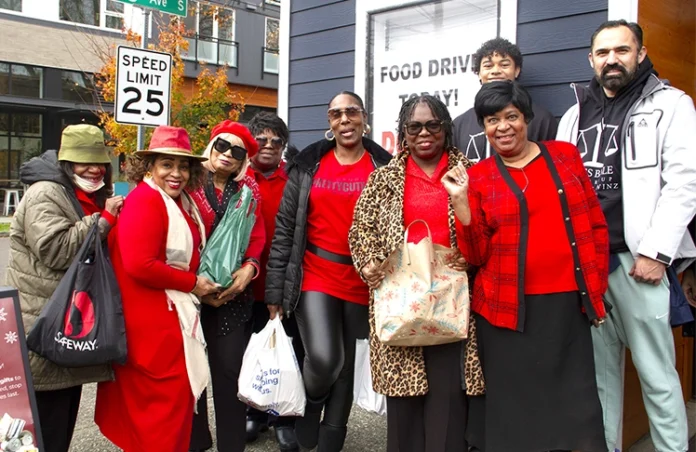
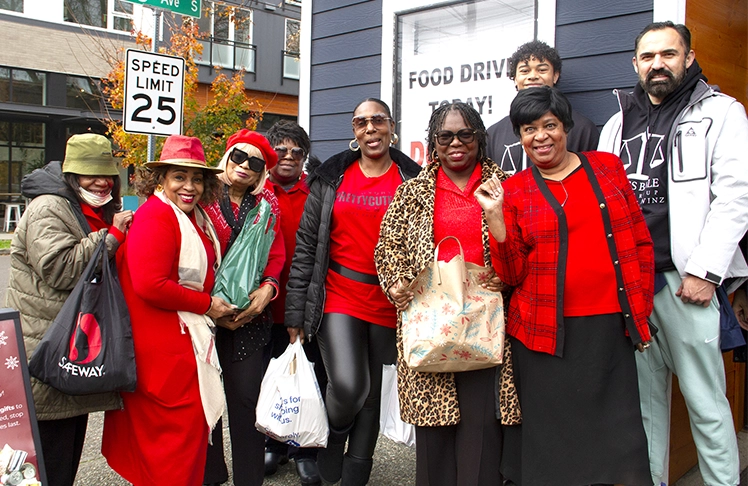
Members of the Dream Keepers of the Diaspora pose with volunteers for the James Bible Law Group during the Seattle Medium and Bennett Media Group’s annual food drive last Saturday. Staff Photo/Aaron Allen

By Aaron Allen, The Seattle Medium

In a powerful show of generosity and community spirit, the Seattle Medium and Bennett Media Group’s annual food drive returned last Saturday, and drew overwhelming support. Held at the Seattle Medium Building in the city’s Central District, the day-long event drew hundreds of donors and volunteers, resulting in thousands of food items collected for families facing food insecurity during the holidays.

A heartfelt thanks goes out to everyone who participated and supported the food drive. Organizers say the event’s return after a pandemic-related pause highlighted not only a renewed need but also a renewed commitment to service.

“We can’t thank our community enough for what they did this past Saturday,” said Chris B. Bennett, Publisher and CEO of the Seattle Medium newspaper. “We couldn’t do this without the support of the community. Yes, we provide the vehicle and the mechanisms behind the drive, but it’s the people who turn out and support the effort that determine the outcome, and their efforts made this year’s food drive a huge success, and we can’t thank them enough.”

“We’d especially like to thank our community sponsors, the James Bible Law Group and Tabernacle Missionary Baptist Church, for the roles that they played in both the receiving and distribution of the food items, and making sure that our community was taken care of this holiday season.”

The collected food will be distributed directly to local families, many of whom might otherwise struggle to put food on the table as inflation and economic challenges continue to impact households across the region.

The event marked the return of the Medium’s food drive after a hiatus that began in 2020 due to the COVID-19 pandemic. Organizers expressed that the need for community support has only grown more urgent in the years since.

Jawann Bennett, Vice President of Bennett Media Group, said the drive’s importance has only deepened during such a difficult time for many.

“The food drive is important because not only is it something that we haven’t been able to produce since COVID, but it’s a necessary time and today’s financial climate,” said Bennett. “And there’s many people’s benefits that either been taken away, jobs that have been taken away. And for the most part, people are, especially up here in the Northwest and in the Seattle area, people are being displaced. They’re being moved out of places where they normally found comfort and where you could find meals and you could find family, there’s barely anything in cupboards.”

This year’s drive also saw a new partnership with the Bible Law Group, whose founder James Bible expressed a shared vision for collaboration and service.

“This is our first time partnering with the Seattle Medium,” said Bible. “We know that Seattle Medium has historically done really solid work with their food drive and their coat drive, and we were looking for a way to help and grow and build within the community, so it seemed like a logical fit.”

From the start, the food drive has served as more than a charitable initiative. It has become a holiday tradition—one that brings families, friends and neighbors together around a shared goal of lifting others up during the season of giving.

“We as a family have been doing this since the 1990s, but I mean the Bennett family has been a central role in the Seattle community, particularly the Black community and how we contribute from the coat drives to the food drives,” said Bennett. “We’re humbled by it but very prideful of it, and we stand on the shoulders of so many that have done it before us.”

“More important for us though is to help others before we focus on each other and celebrate a year of coming together. So personally, I’m humbled by the legacy that we’ve created in regard to helping people and it’s not about us, it’s not about the Bennett name, it’s about community. That’s why we say, ‘service to the community is our most important product.’”

In preparation for the event, organizers encouraged donations of non-perishable items and asked individuals to invite friends, family and professional networks to participate. Their appeal resonated, and the community turned out in full force.

Speaking to the deeper meaning behind the food drive, Bible stressed the urgency and humanity behind the effort.

“It’s important that anybody that can reach out at this time of need for so many others that are in a place where they don’t have adequate food,” said Bible. “There’s a lot of families that are suffering, parents having difficulty feeding their children and the like. And as a community, we need to stand up and help one another, and that’s part of the importance of this food drive.”

As families across the Seattle area prepare for holiday gatherings, the contributions made this past weekend will ensure that many can celebrate with food on the table. More than a one-day event, the drive stands as a testament to what is possible when a community comes together.

In a time when economic hardship continues to stretch household budgets and create uncertainty, the success of this year’s food drive reflects the enduring strength and solidarity of Seattle’s neighborhoods, and the powerful difference made through shared purpose.

“This is what community looks like — coming together to care for one another,” said Chris B. Bennett. “When people give from the heart, lives are changed. That’s the true spirit of the season.”


New Hope Family Housing To Break Ground In Seattle’s Central District

A groundbreaking ceremony for New Hope Family Housing will take place Sunday, November 30 at 2 p.m. at 124 21st Avenue in Seattle. The event will mark the start of construction on a 92-unit affordable housing development located on properties owned by New Hope Missionary Baptist Church at 114 and 123 21st Avenue.

Developed by the New Hope Community Development Institute (NHCDI) in partnership with the Low Income Housing Institute (LIHI), the mixed-use project will provide housing for individuals and families earning up to 50 and 60 percent of the area median income. The development will span two buildings.

The west building will include 70 apartments: 39 studios, 14 one-bedroom units, and 17 two-bedroom units. The east building will contain 22 apartments: 5 studios, 6 one-bedroom units, and 11 two-bedroom units. On-site amenities will include community rooms in each building, a rooftop terrace, ground-floor retail space for nonprofit Clean Greens Farm & Market, office space for the Church and NHCDI, and parking located behind the west building.

Speakers scheduled to appear at the ceremony include Katie Wilson, mayor-elect of Seattle; Rev. Dr. Johnny Youngblood, pastor of House of Hope Church; Wendy Armour, director of advancement for Byrd Barr Place; Curtis Riggins, chair of the New Hope Missionary Baptist Church Deacon Board; Sharon Lee, LIHI executive director; and Caleb Stephen of KeyBank. The development was designed by Weber Thompson and will be constructed by general contractor WG Clark. The seven-story buildings will total 71,530 square feet and are expected to be completed in spring 2027.

“NHCDI is energized as we see these much-needed affordable housing units built. Providing affordable housing in Seattle’s Central District is part of our mission. We invite the public to share in this groundbreaking moment with us,” said Tiffany Howard-Davis, NHCDI board chair.

“We are proud to partner with the New Hope Community Development Institute in creating the Central Area’s first affordable workforce development utilizing Seattle’s new code that provides increased density on land owned by religious institutions. This is a win for the Church as it continues to own the land, and NHCDI benefits from a 99-year ground lease to build the first of many new buildings to serve the housing needs of the community,” said Sharon Lee, LIHI executive director.

Financing for the project includes funding from the Seattle Office of Housing, the Department of Commerce Housing Trust Fund, Transit Oriented Development funds, Washington state Local Community Projects funding, Washington Community Reinvestment Association, Washington State Housing Finance Commission, Seattle Equitable Development Initiative funding, and low-income housing tax credit investment from Enterprise. Construction financing is provided by KeyBank.

The event is free and open to the public. A free community dinner will be served at the Church from 12:45 p.m. to 1:45 p.m. before the start of the ceremony.

UW President Names Hasoni Pratts As New Chief Of Staff

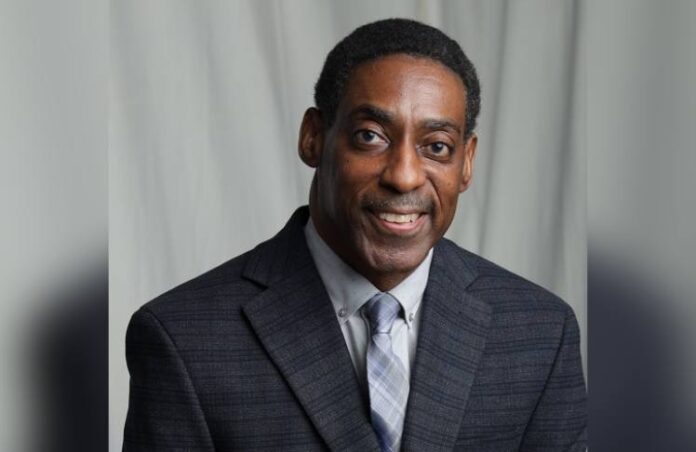
Hasoni Pratts

By Kiara Doyal, The Seattle Medium           

University of Washington President Robert J. Jones has appointed Hasoni Pratts as his new chief of staff. Pratts brings extensive experience in finance, strategic consulting, public policy, and higher education leadership. Her career spans roles at Deloitte, the governor’s office, and the New York State Board of Regents, where she helped shape statewide education policy.

“Hasoni’s appointment reflects my ongoing commitment to recruiting visionary leaders who can help navigate the evolving landscape of higher education and staying true to the institution’s core mission of teaching, research, and public service,” said Jones in a statement from the University of Washington.

Pratts, who describes her appointment as a full-circle moment, says that her experience in higher education governance and national policy advocacy makes her uniquely qualified for this position.

“It’s an amazing opportunity. I feel that everything I have done in my career has prepared me for this moment. My mother was a student on this campus, and so coming back home is kind of like a full circle moment for me,” said Pratts. “Part of the reason I am here is because higher education is under attack. And as someone whose family has fought for this country, all I know is to fight for this country.”

“Higher ed and democracy are under attack, and UW is a great place to be able to fight for democracy and be in a position to protect what has been so great in this country, which is education,” she continued.

As she steps into her new role, Pratts said her top priorities for the first 90 days are to listen, learn, and observe, ensuring that she stays aligned with President Jones’ strategic vision as she becomes fully acquainted with the University.

“Right now, we are working on a strategic plan within listening sessions where I have had the opportunity to sit with first-year students who have been in leadership and listen to some faculty to just get a handle on this place,” Pratts said.

According to Pratts, one of her most urgent priorities is protecting UW’s federal research funding, which supports a wide range of services and innovations that benefit Washington communities.

“The most urgent goal is our federal funding. We are one research institution, and so the most important thing is protecting that because it also has a larger impact on the communities that we serve,” Pratts said. “So, if we are not able to provide health care, do research, or educate the population, then that is urgent because the majority of our students come from the state of Washington, so that is a huge priority for us to make sure that we can secure funding that we have initially relied on for so much.”

Jones said that Pratt’s qualifications and leadership style make her an ideal choice to help serve the University of Washington’s diverse community.

“Hasoni Pratts brings an exceptional combination of governance expertise, strategic vision, and commitment to educational excellence,” Jones said. “Her experience navigating complex policy landscapes and her dedication to expanding access and opportunity in higher education make her ideally suited to help us achieve our strategic objectives and serve our diverse community.”

Although UW’s culture is already deeply felt within the community, Pratts said that her goal is to embrace and strengthen that culture, not change it.

“This is the thing about UW; the culture is ingrained here. You can’t change culture; you can only just try to sit here and embrace it. The people here are so wonderful, the students are brilliant, amazing, warm, and friendly,” said Pratts. “I want to absorb all of that, and I feel so blessed to be in a position where I am being warmly welcomed into the culture. I am not trying to change the culture; I am only trying to be part of it.”

A former national director in higher education and a senior advisor to the CEO of the National Urban League, Pratts said her passion for public engagement is central to her leadership approach.

“That’s my sweet spot. Public engagement. I worked directly on various different projects that work directly within the community, so I love being directly engaged with those on the ground, and that is my actual sweet spot,” said Pratts. “I am looking forward to just being more actively engaged and learning more about the communities that we serve and the people around us.”

Pratts also sees deep alignment between the missions of the National Urban League and higher education.

“It is all the same things. What higher education does is that it allows those to rise into the middle class, and the National Urban League is all about economic empowerment, equity, and opportunity, and higher education gives you opportunity,” Pratts said. “The work is just continuous and along the same continuum. It is the exact same thing, providing opportunities like higher education does.”

“I am thrilled to be able to continue some of the same work, but just in a different capacity and in a different venue,” Pratts continued.

Despite her extensive background in higher education leadership, Pratts said it is her experience working with young people that has most shaped who she is today.

“Young people give me inspiration and hope, and they let me know we are going to be okay. From me, interacting with them it is like this nation is going to be okay because of these young people. They are smart, brilliant, and balanced,” said Pratts. “The vibrancy in them, that is the future, and I know we will get past whatever challenges because of them.”

Looking ahead, Pratts said she is excited to partner closely with President Jones in advancing the University’s commitment to access and equity.

“He is a seasoned leader, and he is just right for this moment when higher education is under attack. He understands it all. He is so interested in having debt-free college, which is huge when some people actually shy away from going to college because they can’t afford it,” she said. “He is focused on making sure that this institution is a place where people feel like they can belong and actually have the opportunity to higher education.”

Seattle Soul‑Food Café Burglarized Just Before Launch Of Their Community Feeding Program

Simply Soulful, a Black-owned soul food restaurant in Seattle’s Central District,

By Aaron Allen, The Seattle Medium

Last Tuesday morning, just before sunrise, the front door of Simply Soulful, a Black-owned soul food restaurant in Seattle’s Central District, was shattered during a break-in. The burglary came just hours before the business was set to launch a new community feeding program aimed at helping those facing food insecurity.

According to co-owner Lillian Rambus, the break-in occurred at 6:50 a.m., just moments after a shift change in the restaurant’s 24-hour security coverage. The intruder shattered the front door glass to gain entry and stole the restaurant’s daily cash box.

“The craziest thing is that we have 24-hour security,” said Rambus. “They had just switched shifts. One (security officer) had got into his truck. The guy that was coming on got out of his truck. He said his supervisor was coming that day, so he wanted to go ahead and do his walk around because normally he just sits in the parking lot across the street. He went to do his walk around the building and came back, and in that time, our restaurant had been broken into.”

The break-in left the main entrance significantly damaged. The owners are now exploring options to increase security without compromising the restaurant’s appearance.

“The damage to the door was more costly than the financial loss from the burglary,” said Rambus. “I’m not sure exactly what we are going to do, but we definitely have to increase the security. I don’t want to mess up the aesthetic with the front, so that’s my biggest thing, finding a way to make it more secure without making it look like it’s in the middle of a war zone.”

Despite the early morning damage, Simply Soulful opened for business that day and moved forward with the launch of its community feeding program, a grassroots initiative born from growing need in the neighborhood. The program aims to provide warm, nourishing meals to anyone in need on a first-come, first-served basis, with no questions asked.

“I think the beginning of the month just showed us like people are one check or one EBT deposit away from starving,” said Rambus. “The food banks are running out of food, and sometimes you’re giving people food and they ain’t got nowhere to cook it.”

“We have the facilities. We have the kitchen. We can put out 100 meals probably faster than other people can. So that was something that me and my staff, some of them on their day off, come back in and help us serve or help us cook or whatever. We just started doing it out of our own pocket, really,” added Rambus.

While the program had just launched the week prior to the burglary, it had already made an impact, according to Rambus. That made the timing of the break-in even more painful.

“I’ve been here for three years, and we started our feeding program last week, and I hate to think, but I’m like, I just hope it’s not somebody that I actually tried to feed,” said Rambus. “Like this is crazy. Don’t come when we’re trying to do things (for the community) and then come back and try to rob me. If you had asked me for something to eat, I obviously would have given it to you. I’m just frustrated, that’s all.”

Simply Soulful continues to operate the feeding program while repairing the physical and emotional damage left behind. For those who want to support, the restaurant encourages donations or simply spreading the word. As their flyer states, “Every bit of help makes a world of difference.”

‘Like A Pawn In A Game’: 13 Months Without Representation In A Texas Congressional District

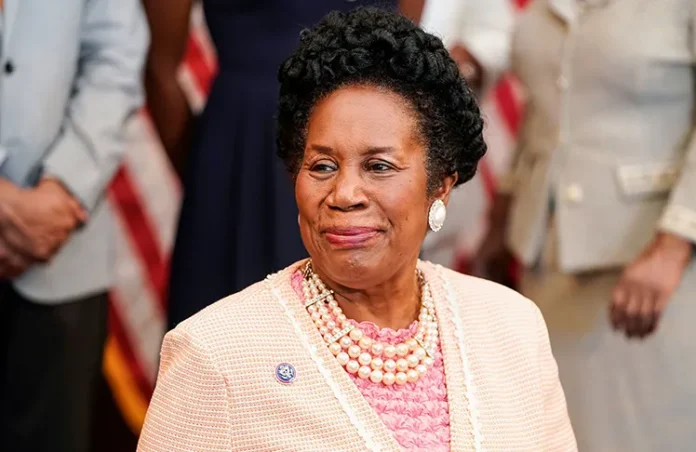
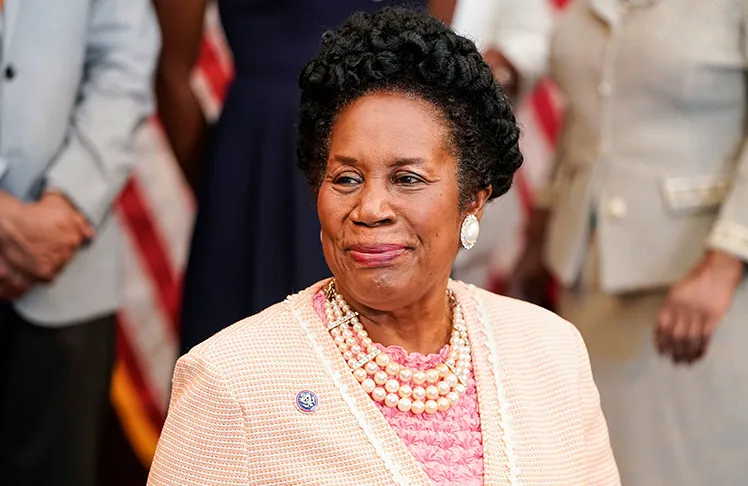
Rep. Sheila Jackson Lee waits for Speaker of the House Nancy Pelosi to arrive for a bill enrollment signing ceremony for the Juneteenth National Independence Day Act on Capitol Hill, on June 17, 2021. (Joshua Roberts/Getty Images/File via CNN Newsource)

By Molly English, CNN

(CNN) — In the heart of Houston and its surrounding areas, the residents of Texas’ 18th Congressional District had long counted on one person to fight for them in Washington.

Democratic Rep. Sheila Jackson Lee represented the district for more than 30 years and set a precedent as a strong voice for Black Americans and someone intimately involved in the community and its issues.

It’s a stark change from what the district has in representation now: No one.

Jackson Lee’s death in July 2024 set off a saga that’s left roughly 800,000 people without a consistent voice in the US House ever since. The story involves different tides of national politics crashing into each other: the long-running Democratic debate over the age and health of the party’s officeholders, the Republican imperative to protect a razor-thin House majority and a redistricting fight that’s pitting candidates of the same party against each other.

By the time of a January 31 runoff election to fill the seat, the district will have been without a representative for 13 of the preceding 18 months. And the winner of that runoff could lose in a primary five weeks later.

“The congressional 18th is being used like a pawn in a game,” said Joetta Stevenson, the president of the Greater Fifth Ward super neighborhood.

“We are historically an African American community. We have a huge population of Hispanics in this community. We have people in need, and without the federal representation, we are all going to suffer because of that,” Stevenson said.

One by one, important votes in the House like the one that passed President Donald Trump’s sweeping domestic agenda bill in July have gone by without a say from Texas’ 18th District, where there are more than 150,000 people enrolled in Medicaid and about 293,000 households receiving SNAP, or food stamp benefits. Both programs saw significant changes and cuts with the passage of the bill.

“Having Sheila Jackson Lee as our representative all these years, I think we were spoiled, spoiled rotten,” says Ken Rodgers, a Houston-area activist and president of the greater Third Ward super neighborhood. “There were things that kind of got to my ear and on my table for concern and she was already on it, already doing it.”

How did it come to this?

July 2024: Jackson Lee dies

In June 2024, Jackson Lee announced she had been diagnosed with pancreatic cancer.

The 74-year-old acknowledged she would be “occasionally absent” from Congress and admitted that “the road ahead will not be easy.”

“I stand in faith that God will strengthen me,” she said.

Just over a month later, Jackson Lee died. Up until that point, the district had not been without representation in 35 years, when former Democratic Rep. Mickey Leland died in a plane crash on a relief mission in Ethiopia and the seat was vacant for four months.

November 2024: Sylvester Turner is elected

Erica Lee Carter, Jackson Lee’s daughter, won the special election that November to serve out the remainder of her mother’s term in Congress, which ended on January 3, 2025.

That same election night, Sylvester Turner, the former Houston mayor who also served 27 years as a state representative, won a separate vote to serve the next full term starting in January. He became the Democratic nominee by a narrow vote of party leaders in Harris County because Jackson Lee died within too tight a window to hold another primary.

Turner had revealed in November 2022 that he had undergone treatment for bone cancer.

Bill Pesota, a retired attorney and a Harris County Democratic precinct chair, says he argued against Turner to other county Democrats.

“I tried reasoning with the chairs who supported Sylvester Turner to say, look, you know, we just had one elderly cancer patient in office pass away. Do we really want to put another one there? And by a very slim majority, my side lost,” Pesota said.

March 2025: Turner dies

Turner took office in January 2025.

He attended his first presidential joint address on the evening of March 4, just hours after the 70-year-old congressman apparently suffered a “medical emergency” in the basement of a Capitol office building earlier that day, according to NBC News. At the speech, he sat with his fellow Democrats and his guest of the night, a mother from Houston reliant on Medicaid for her daughter’s rare genetic disorder.

It was a shock to both his House colleagues and his constituents, then, when it was announced that Turner had passed away on the morning of March 5. It had only been 61 days since he had taken office.

Pesota rues having lost the vote to make Turner the nominee.

“If that vote had gone the other way, if just two people had changed their votes … we would have a representative in Washington right now,” he told CNN.

April 2025: Texas governor sets a special election seven months away

A month after Turner’s death, Texas Republican Gov. Greg Abbott set the special primary election to fill the seat for November 4. The decision to wait seven months was widely panned by Democrats, some of whom accused the governor of delaying the election to help House Republicans.

House Republicans have a tiny majority. Each seat is important enough that another special election in Arizona – won by Rep. Adelita Grijalva to replace her father, the late Rep. Raul Grijalva – took on national importance because she provided the final signature on a discharge petition to force the successful vote on releasing the Jeffrey Epstein files.

CNN reached out to the governor’s office for comment on why the elections were not scheduled sooner. Abbott has previously said the delay was to allow Harris County “adequate time to operate a fair and accurate election,” calling the county’s ability to do so a “repeat failure.” Republicans have long accused the Democrat-led county of mishandling elections, allegations Harris County officials strongly deny.

November 2025: A special election leads to a January 2026 runoff and ‘absolute confusion’

The top two vote-getters on November 4 were former Houston City councilmember Amanda Edwards, who narrowly lost out on the 2024 party nomination to Turner, and Harris County attorney Christian Menefee. They advanced to a runoff that Abbott set on January 31.

But things have gotten even more complicated.

In August, Abbott and Texas state House Republicans kicked off what ended up being the first domino in a nationwide mid-decade redistricting effort. Abbott eventually signed into law a new map that aimed to give Republicans at least five more House seats in 2026. The 18th District was made even more Democratic and absorbed much of the current 9th District, which became Republican leaning.

Then two members of a three-judge panel this month invalidated the new map, arguing ruling Texas Republicans had proven they wanted to aimed to discriminate by race in changing the district boundaries. The state has appealed to the US Supreme Court, which has paused the the panel’s ruling.

“It’s just absolute confusion and mayhem,” Menefee said. “A lot of my campaign isn’t even to get people to vote for me, it’s to get people to understand what the hell is going on. And all of this is intentional by the governor. It’s to throw our elections into a tailspin.”

Edwards echoed the same concerns, emphasizing that the confusion will lead to voter fatigue and more voters opting out of election after election.

“And I think that is, in fact, the intention is for people to stay at home,” Edwards said. “It’s the plan. You get chaos involved, and you have too much chaos. People get overwhelmed. When they get overwhelmed, they disengage, and then they stay at home.”

March 2026: Another primary and a potential Democratic fight

If the US Supreme Court steps in and allows the new map to go into place, whoever wins in January would be an incumbent for five weeks before running in the March primary against another stalwart of Houston politics: Rep. Al Green, who was first elected to Congress in 2004 and served alongside Sheila Jackson Lee. Green’s home has been placed under the new map into the 18th District instead of his current 9th District.

“It makes sense for me to run where my home is and where hundreds of thousands of people that I have been representing are, and I will be faithful to them in doing this,” Green told CNN. “I am not moving.”

A 78-year-old Green would be up against both Menefee, 37, and Edwards, 43, both of whom intend to file for the race. If no candidate wins over 50% of the vote in the primary, there would be yet another election, this time a runoff for the top two finishers.

“I encourage people to run,” Green said. “I’m not trying to push anybody out of a race. Let them run.”

Green told CNN that he had not heard any concerns about his age from constituents, and that reports about concerns were “a fiction of the press.”

Among the community activists to voice those concerns was Fred Woods, a Democratic precinct chair.

“We are so far behind because we didn’t get a knowledge transfer from Sheila,” Woods told CNN. “We are so far behind because we didn’t get a knowledge transfer from Sylvester Turner.”

“If we do not learn from history, we are failed to repeat it,” he said.

The-CNN-Wire
™ & © 2025 Cable News Network, Inc., a Warner Bros. Discovery Company. All rights reserved.

Bessemer Is Moving Ahead With Its Massive Data Center

“There’s actually more specifics for how you can build a swimming pool in your backyard than for building a data center.” (Credit: Getty/Overearth)

by Willy Blackmore

Not only could you hear the opposition to the Project Marvel data center plan at last week’s Bessemer, Alabama, city council meeting, you could see it too. The chamber was full of people wearing red, the color of solidarity with those organizing against a plan to bring a $14.5 billion “hyperscale” data center to a wooded property that runs along the city limits. 

But despite all the red, and all the public comments from people who are concerned about the resources the data center could suck up and the potential for pollution, too, the city council voted 5-2 to rezone the property from agricultural to light industrial, marking a significant step forward for Project Marvel.

Black and White United in Opposition 

Council members Donna Thigpen, who is white, and Cleo King, who is Black, were the only two “no” votes.

The city of 25,000 people is nearly 70% Black. In the more rural areas outside of Bessemer city limits, where most of the potential neighbors to the data center live, the population is much whiter. But both communities seem to be well represented in the opposition to the data center, which has raised a host of concerns not only for immediate neighbors but potentially for people across Alabama, too. 

Secrecy, NDAs, and Few Public Answers

But answers to any questions about water usage, the potential for increased utility costs for all Alabama Power rate payers, environmental damage, and pollution from backup diesel generators have been hard to come by — if not impossible. Many Bessemer city council members signed NDAs with Logistic Land Investment, the developer behind the Project Marvel plan.

Representatives from the developer have been attending public meetings, but they haven’t been exactly forthright about answering these bigger questions that opposition to the data center has gelled around. 

“We’ve gotten a clean bill of health from the site,” Brad Kaaber, a spokesperson for Logistic Land Investment, said at last week’s meeting. “Otherwise, we’d be looking at other sites.” But council member King told Inside Climate News that he never saw any such “clean bill or health” or other environmental impact report.

A Water-Thirsty Project

The company’s own filings for the planning approvals process have provided most of the specific details that are available about Project Marvel. That includes an estimate that the facility will need 2 million gallons of water per day. Logistic Land Investment has said it will pay the Warrior River Water Authority for capital improvements necessary for that water to be supplied to the site, but that’s about all the public detail available regarding the massive proposed water usage. 

“We have a lot of promises from these developers. We’ve not been able to see any of them in writing,” Charles Miller, policy director of Alabama Rivers Alliance, told Al.com. “When it comes to zoning in Bessemer, there’s actually more specifics for how you can build a swimming pool in your backyard than for building a data center.”

It seems, too, that the general unpopularity of data centers is spreading as big projects like Colossus in Memphis and, now, Project Marvel, get more attention.

“I just visited Atlanta and spoke with two residents there, Tonya and Teshia, who both informed me of the noise that they hear throughout the night and day because of the data center,” Bessemer resident Dante Franklin said during the public comment period at last week’s council meeting. “We know that they used generators that contained diesel fuel, which is linked to lung cancer, cardiovascular diseases, and premature deaths.”

Tia Mowry’s New Series Encourages Cancer Talk Over Home-Cooked Meals

Actress and culinary enthusiast Tia Mowry’s new video series launches Nov. 24. Cover photo courtesy Pfizer. Video produced by Shernay Williams/Word In Black.

by Shernay Williams

Like many Black women, actress Tia Mowry has lost people she loves to cancer. Moreover, she had her own breast cancer scare last year when doctors found an abnormality during a routine mammogram. 

“I was scared; I was overwhelmed,” she said in a sit-down interview with Word In Black. “I ended up getting a biopsy, and everything ended up turning out fine. But I do know that’s not the story for everyone.”

Black people are more likely to die from breast and prostate cancer than any other racial group, according to 2025 findings by the American Cancer Society.

These mortality disparities, paired with personal experiences, have inspired Mowry to host a new video series called “Rewrite the Recipe,” launching Nov. 24. In the episodes, the actress, who calls food her love language, joins cancer survivors and advocates in the kitchen to talk through family recipes and their experiences with breast and prostate cancer.

“There were tears; there was laughter,” she reflects. “We’re in the kitchen. We’re cutting up some collards – there’s some catfish that’s being fried, and there we are having some intimate conversations around what’s sometimes a hard topic, which is cancer.” 

The series is part of the Changes the Odds initiative, a partnership between the American Cancer Society and Pfizer. 

Mowry’s goal, she says, is to encourage Black families to treat good food and good company at the dinner table as an opportunity to be vulnerable about their family history with cancer.

“It is really important for us to know our family history and our family’s connection to cancer and share it with our doctors so that we can get the proper screenings,” she says.

The series airs on cancer.org/changetheodds. The site also includes a directory of U.S. facilities offering free or low-cost cancer screenings. 

Watch a preview of the series in the Word In Black video above. 

The Dept. Of Education Is Critical After All

by David W. Marshall

(Trice Edney Wire) – Lindsey Burke is not a household name, but many Americans will one day feel the painful depth of her work. Burke, who currently serves on the Board of Visitors for George Mason University, was previously Director of the Center for Education at The Heritage Foundation. The Heritage Foundation is the influential conservative think tank that published Project 2025. In her 17 years at the Heritage Foundation, Burke oversaw research and policy on preschool, K-12, and higher education reform.

She is the author of the education chapter in Project 2025, which outlines a conservative education policy agenda and provides recommendations to a conservative president on the Department of Education. Burke’s chapter on the Education Department proposes a major overhaul of the federal education infrastructure by moving the department’s various services to other federal agencies and using federal funds to expand school choice. Several of the authors of Project 2025 are now working inside the Trump administration, including Lindsey Burke.

Burke is now deputy chief of staff for policy and programs at the U.S. Department of Education. As a presidential candidate, Donald Trump distanced himself from Project 2025 by calling the document “absolutely ridiculous and abysmal.” Now that he is back in office, Trump and his administration have embraced some of Burke’s Project 2025 proposals by announcing that the Department of Education is moving many of its key functions to other federal agencies. Ahead of the announcement, Burke called the bid a first step or “the engagement of the marriage.” She added, “Now the work begins.” Project 2025 is real, and those who created it are now emboldened to implement it.

The pain will be felt hard by transferring the responsibility of overseeing Title I funding from the Department of Education to the Department of Labor. Title I was created in response to the Civil Rights Act of 1964, when the Elementary and Secondary Education Act of 1965 was signed into law by then-President Lyndon Johnson. By enacting Title I, Congress recognized that students in high-poverty schools have greater educational needs; therefore, supplemental financial assistance to school districts was needed to close this divide. What does this have to do with the mission of the Department of Labor? Trump was right, it is “ridiculous and abysmal.” We should not be surprised when policies that favor the wealthy and privileged are again exposed. Even though the truth is being exposed, are people paying enough attention, and will they ever care? We have a president who lied (again) to the American voters by denying his support for Project 2025. Will Republicans defend those students who are their constituents or continue to do the president’s bidding? Voters who supported Kamala Harris while sounding the Project 2025 alarm are not surprised as the current events start to unfold. The question remains, will the Project 2025 lies eventually catch up and backfire on the Trump administration?

Republicans are now starting to second-guess Trump’s plans to dismantle the agency. Some are beginning to appreciate the department more as the reality that key programs are being negatively affected sinks in. U.S. Rep. Brian Fitzpatrick, a Republican from Pennsylvania, stated he wanted to see “exactly how essential these programs are” and pledged to protect them. He added, “Altering them without transparency or congressional oversight would pose real risks to the very students they were created to protect.” Fitzpatrick concluded, “I will not allow it — and I urge all of my colleagues to stand with me.” It took only a handful of Republicans to force the release of the Epstein documents. Fitzpatrick could be the linchpin with other persuadable Republicans regarding the Department of Education. If so, they need to take a hard look at the “One Big Beautiful Act (OBBBA).” As Project 2025 moves forward, the same is true for the OBBBA.

 Again, we are not surprised. We already knew that the One Big Beautiful Bill Act (OBBBA) included numerous provisions that disproportionately favor the rich and privileged, primarily by deep cuts to safety net programs while expanding benefits for the wealthiest Americans. When the Department of Education’s Reimagining and Improving Student Education (RISE) Committee reached preliminary consensus on a proposed definition of “professional degree programs” under the OBBBA, it changed the definition of what is considered a professional program, as well as placed a cap on federal student loans. The list of degrees not classified as professional includes nursing, physician assistants, physical therapists, audiologists, architects, accountants, educators, and social workers. Individuals in these fields will no longer have access to the same student loan options as before. Jennifer Mensik Kennedy, the president of the American Nurses Association, said the changes will undermine the healthcare system as a whole in a time when help is needed.

“Nurses make up the largest segment of the healthcare workforce and the backbone of our nation’s health system,” she said. “At a time when the healthcare workforce in our country faces a historic nurse shortage and rising demands, limiting nurses’ access to funding for graduate education threatens the very foundation of patient care. In many communities across the country, particularly in rural and underserved areas, advanced practice registered nurses ensure access to essential, high-quality care that would otherwise be unavailable.”

It is no surprise that professional women dominate the majority of the redefined fields.

David W. Marshall is the founder of the faith-based organization TRB: The Reconciled Body and author of the book “God Bless Our Divided America.”

Seattle Residents Face Staggering Cost Of Living In Competitive Metro Area

Residents of Seattle are grappling with a significant financial challenge as a recent study reveals that a single adult must earn an astonishing $135,265 each year to enjoy a comfortable lifestyle in the Seattle-Tacoma-Bellevue metropolitan region. This figure places Seattle as the sixth most expensive metropolitan area in the United States, as determined by research from Upgraded Points, which utilized data from the Economic Policy Institute and the U.S. Census Bureau.

The findings of this study shed light on the escalating economic pressures that American families are experiencing. Essential costs, including rent, groceries, and childcare, have soared in recent years, forcing households to reassess their financial strategies. The analysis applies the widely recognized 50/30/20 budget rule, which designates 50% of income for necessities, 30% for discretionary spending, and 20% for savings or debt repayment, to ascertain the income required for a comfortable living.

For families residing in the Seattle metro area, the financial burden is even more intense. A two-parent household is projected to need an income ranging from $242,585 with one child to a staggering $370,036 with three children in order to maintain a comfortable lifestyle. These figures present a stark contrast to the median household income in the area, which is currently pegged at $146,665, highlighting a significant gap between what families earn and what they need to thrive.

On a national scale, the study indicates that a single adult requires an annual income of $106,745 to live comfortably, while a two-adult household without children needs about $138,643. The financial demands escalate considerably for families with children, with the income requirement soaring to $278,252 for a household with three children.

This report emphasizes the regional disparities in living costs across the United States, illustrating that coastal regions such as California and the Northeast demand significantly higher incomes compared to areas in the Midwest and South. In San Jose, California, for example, a single adult is required to earn $163,045 annually, making it the most expensive major metro area for single individuals, while in Cleveland, Ohio, a single adult can manage comfortably on less than $87,000.

Tulsa Race Massacre Survivor Viola Ford Fletcher Can Finally Rest

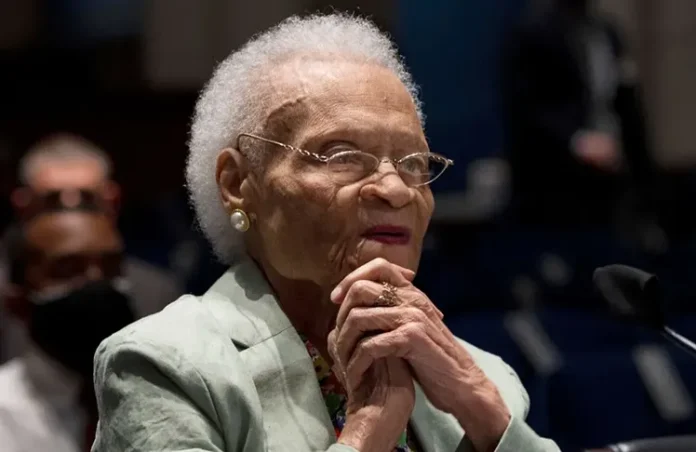
Viola Fletcher testifying before the Civil Rights and Civil Liberties Subcommittee hearing on "Continuing Injustice: The Centennial of the Tulsa-Greenwood Race Massacre" on Capitol Hill in Washington, DC on May 19, 2021. (Photo by JIM WATSON / AFP) (Photo by JIM WATSON/AFP via Getty Images)
Viola Fletcher testifying before the Civil Rights and Civil Liberties Subcommittee hearing on “Continuing Injustice: The Centennial of the Tulsa-Greenwood Race Massacre” on Capitol Hill in Washington, DC on May 19, 2021. (Photo by JIM WATSON / AFP) (Photo by JIM WATSON/AFP via Getty Images)

by Liz Courquet-Lesaulnier

For more than a century, rest never came easily to Viola Ford Fletcher. When she closed her eyes, the horror of what she experienced in 1921 in the Greenwood section of Tulsa haunted her dreams. 

“When I sleep, it is never very deep or for very long because of the anxiety and the things I see,” she explained in “Don’t Let Them Bury My Story,” her 2023 memoir. “Imagine having the same horrible nightmare every night for 100 years.” 

On Monday, “Mother Fletcher,” as she was called, the oldest living survivor of the Tulsa Race Massacre, died surrounded by family. She was 111.

Her grandson, Ike Howard, told CNN that she left this world with “a beautiful smile” on her face. “She loved life, she loved people,” he said. 

The Child Who Watched Black Wall Street Burn

Fletcher was just 7 when 10,000 angry white Tulsans — armed with guns and biplanes, fueled by alcohol and envy, driven by talk that a Black man had accosted a white woman — descended on Greenwood, a thriving African American community known as Black Wall Street, on the evening of May 31. By noon on June 1, when the Oklahoma National Guard reclaimed the streets, an estimated 300 men, women, and children lay dead or dying, and 1,200 homes had been looted, destroyed, or both. 

Justice Department report issued in January, just days before President Joe Biden left office, marked the first time the federal agency publicly acknowledged how the white mob “murdered hundreds of residents of Greenwood, burned their homes and churches, looted their belongings, and locked the survivors in internment camps.” 

Aftermath of the Tulsa race massacre, June 1, 1921. Unknown source, Public domain, via Wikimedia Commons

Nearly every Black family in Greenwood — about 10,000 people — was left homeless.

That the DOJ finally spoke the truth is due to Fletcher and other survivors who testified before Congress in May 2021, 100 years after the terror they endured.

“I will never forget the violence of the white mob when we left our home,” she told lawmakers. “I still see Black men being shot, Black bodies lying in the street. I still smell smoke and see fire. I still see Black businesses being burned. I still hear airplanes flying overhead. I hear the screams,” Fletcher testified.

“I have lived through the massacre every day. Our country may forget this history, but I cannot.”

The Courage to Tell the Truth

Having told the truth that Tulsa — and America — attempted to bury, Fletcher sought justice. She and other survivors sued the city in 2020, seeking reparations for what they said was the complicity of local officials in the massacre. 

Indeed, the Justice Department report found that “the massacre was the result not of uncontrolled mob violence, but of a coordinated, military-style attack on Greenwood” — a ruthless assault plotted in part by real estate speculators, businessmen, and elected city leaders. Their case went all the way to the Oklahoma Supreme Court, which upheld a lower court’s dismissal in 2024. 

In June, Mayor Monroe Nichols IV announced that the city would attempt to raise $105 million by 2026 — the massacre’s 105th anniversary — to compensate the survivors’ descendants.

Viola Ford Fletcher entered this world in 1914, the daughter of sharecroppers, and died as one of the most important eyewitnesses to American history. The night of the massacre, she and her family fled in a horse and buggy — through gunfire. She remembered seeing a white man shoot a Black man in the head, point-blank.

“The neighborhood I fell asleep in that night was rich — not just in terms of wealth, but in culture, community, heritage. Within a few hours, all that was gone,” she told Congress in 2021.

A Legacy of Survival and Courage

With Fletcher’s death, just one living survivor remains: Lessie Evelyn Benningfield Randle, also 111, six months younger than Fletcher. When Fletcher fell ill, Randle sent word through her granddaughter: “She was sorry it was happening and that she loved her.”

As news of her death spread, tributes flooded social media.

“I will miss you, Mother Viola Fletcher. So triumphant. So gracious. So courageous. So present. Thank you,” Dr. Bernice King wrote on Threads. 

Fletcher witnessed what no child should, yet died knowing that no one was held accountable for the trauma she carried through a lifetime. She saw the election of the nation’s first Black president, Barack Obama, traveled to Ghana at age 107, and met Biden at the centennial observance of the massacre. But the justice she and her community deserved eluded her. 

Now, after 111 years, the nightmare that stalked her is over.

At long last, Viola Ford Fletcher can finally rest.