Analysis by Zachary B. Wolf, CNN
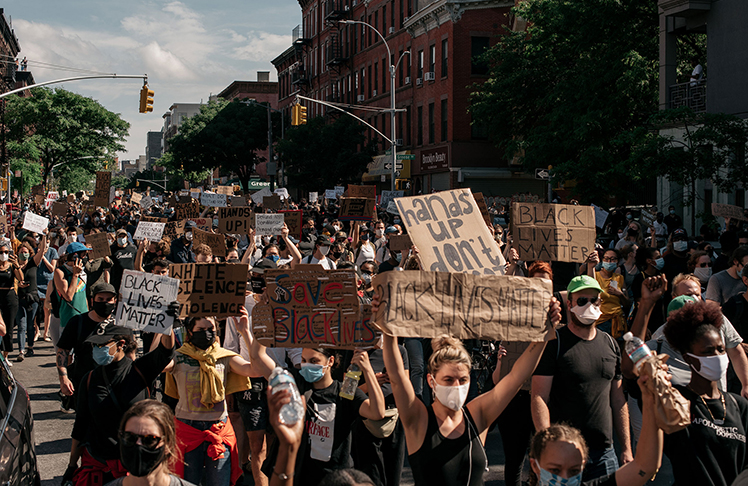
(CNN) — After a week of demonstrations and public outcry over the death of George Floyd at the hands of a white police officer, President Donald Trump is increasingly isolated in his efforts to villainize those marching against racial injustice.
The rest of the country — and the world — is catching up with reality and embracing calls for action.
“I know enough about that history to say: There is something different here,” former President Barack Obama said Wednesday, referring back to the protests of the 1960s. “You look at those protests and that was a far more representative cross section of America out on the streets, peacefully protesting, who felt moved to do something because of the injustices that they have seen. That didn’t exist back in the 1960s, that kind of broad collation.”
CNN’s Brandon Tensley writes:
The books are flying off the virtual shelves: “White Fragility: Why It’s So Hard for White People to Talk About Racism,” Robin DiAngelo; “So You Want to Talk About Race,” Ijeoma Oluo; “The New Jim Crow: Mass Incarceration in the Age of Colorblindness,” Michelle Alexander.
Social media streams, meanwhile, are filled with white Americans learning about the power of supporting black-owned businesses, and sharing reading lists and podcasts that address racism — and their responsibility to be not just not overtly racist, but anti-racist.
Even corporate America, which is motivated by profit, is actively and vocally trying to appeal to consumers’ new appetite for justice. The US Chamber of Commerce, for instance, is trying to be woke. It’s launching a nationwide initiative on inequality.
Ice cream maker Ben and Jerry’s was already notable for its progressive causes, but its blistering statement about the protests that continue across the country is remarkable for its candor. That makes this feel like some kind of turning point, especially since the protests feel so much bigger right now than the rioting and looting that Trump keeps trying to emphasize.
If companies are behind change — or at least the idea of change — does that mean they’ve sensed the American ground shift?
In her piece about Ben and Jerry’s, CNN’s Hanna Ziady notes: “Companies including Nike (NKE), Netflix (NFLX), Twitter (TWTR), Disney (DIS), Facebook (FB) and Intel (INTC) have condemned racism and injustice in recent days.”
That’s not an activist portfolio. That’s your 401k. Is that going to solve things? Not today or tomorrow. But it sure seems like a silver lining to all of this.
A long-term tectonic shift
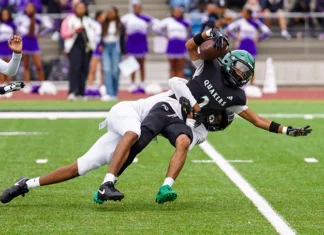
Colin Kaepernick can’t get a job throwing the pigskin, but he’s been selling activism through Nike for years now.
And maybe sports leagues will have to change their tunes too.
Kaepernick was chased out of the league a few years ago for taking a knee, in a show of respectful protest during the national anthem.
Consider that and then read this interview where Seattle Seahawks coach Pete Carroll says the league and the country owes a debt to Kaepernick.
The NFL’s former spokesman, Joe Lockhart, wrote on CNN the other day that Kaepernick should get a chance on the Minnesota Vikings.
Or read New Orleans Saints coach Sean Payton’s tweet about George Floyd and his public call for Americans to vote in November.
Or watch this video of Premier League soccer players in England (they’re playing in empty stadiums) taking a knee in solidarity with the Floyd protests and tell me how many NFL or NBA players are going to take a knee the next time there’s a professional sporting event?
And bear in mind, Liverpool’s official Twitter account sent out that video. Liverpool is owned by the same company that owns the Boston Red Sox.
The sports world is an offshoot of the corporate world, for sure. When you pair together the gestures across these universes, you get the sense something is happening.
What do people actually think?
While there are some polls that suggest Americans are generally supportive of the protests, CNN’s polling director Jennifer Agiesta says it might not tell the whole story quite yet.
Here’s what she said when I asked for her thoughts:
Several recent polls have found broad support for peaceful protests (73%, according to a Reuters/Ipsos poll), a belief that the anger driving the protests is justified (78%, per a Monmouth University poll), and a majority who feel that police in most communities treat whites better than blacks (57% per a CBS News/YouGov poll).
Those same polls reveal disapproval of Trump’s handling of the situation, as well as deep skepticism that he is looking out for the interests of racial and ethnic minorities. In the Reuters/Ipsos poll, just 33% of Americans said they approve of the way Trump is handling the protests, and 6 in 10 in the Monmouth poll said they lacked confidence in his ability to handle race relations. Among people of color, that lack of confidence rises to 78%.
The CBS News poll found about half of voters feel the President works against the interests of blacks (50%) and Hispanics (51%), with about half as many saying they thought Trump worked in favor of those groups.
But it is worth noting that polling takes several days to measure the reaction to major events, and in this fast moving story, even the most recent high-quality polling on the subject — the Reuters/Ipsos poll fielded Monday and Tuesday — was not conducted entirely after Monday night’s events in Lafayette Park.
A long long long long way to go
So what if corporate America is on board with changing things and Americans say they want fairness?
This is where optimism turns to very painful facts. There’s evidence of racial inequality everywhere in the country.
CNN’s Tami Luhby has a look at two very different Americas through six charts:
Wealth — The average white household’s wealth is 10x bigger than the wealth of the average black household.
Income — The median black household income is 60% of the average white household.
Unemployment — The unemployment rate for black Americans exceeds that for white Americans.
Poverty — Less than 1 in 10 white Americans live in poverty.
More than 1 in 5 black Americans live in poverty.
Health care — Black Americans are less likely to have health insurance.
Illness — They are also more likely to die of Covid-19.
Trump’s millitary views this a lot differently than Trump
There’s a growing rift between Trump and his defense secretary over the possible use of US soldiers on US streets following Monday’s episode outside the White House.
And on Wednesday, even Trump’s former Pentagon chief tore into him.
James Mattis — a man who has kept mostly silent since leaving the administration and who built a career based on loyalty and respect for the military chain-of-command — sent troops a message that the country can unite without the President’s lead.
“Donald Trump is the first president in my lifetime who does not try to unite the American people—does not even pretend to try. Instead he tries to divide us,” the retired Marine general said of his former boss.
There’s actually a long list of top military brass who have released statements about racism in the past few days. The most important came from the top enlisted man in the Air Force. “Who am I? I am a Black man who happens to be the Chief Master Sergeant of the Air Force. I am George Floyd,” Kaleth Wright said, promising a review of the military justice system.
The-CNN-Wire
™ & © 2020 Cable News Network, Inc., a WarnerMedia Company. All rights reserved.