By Kiara Doyal, The Seattle Medium
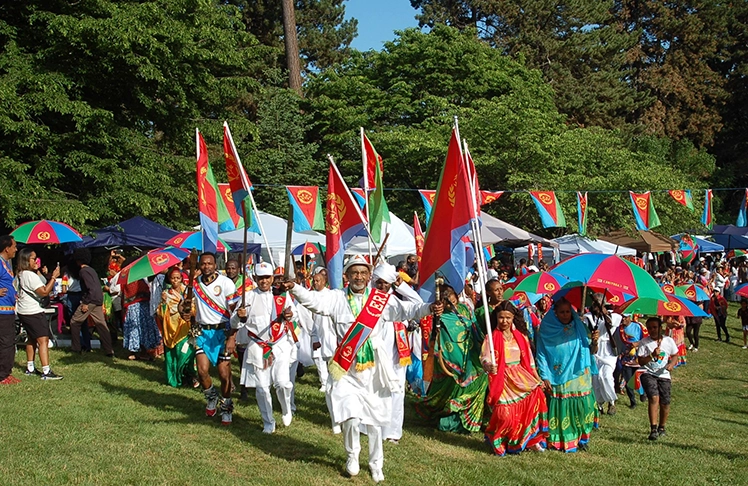
For more than 25 years, the Eritrean Association of Greater Seattle (EAGS) has served as a cornerstone for Seattle’s East African community, providing culturally responsive services, educational programs and a welcoming gathering place for more than 3,000 residents. Now, thanks to support from Seattle’s Neighborhood Matching Fund (NMF) and the efforts of community volunteers, the organization has completed a major safety upgrade that will help preserve its community center and the vital services it provides for years to come.
The community center serves as a vital resource for seniors, youth, families, immigrants and refugees by providing culturally responsive services, educational programs and a trusted gathering place for Seattle’s Eritrean community.
EAGS first received a Neighborhood Matching Fund grant in 2000 to help build its community center. Since then, the organization has continued to partner with the City of Seattle to improve and expand the facility, ensuring it can continue meeting the evolving needs of Seattle’s Eritrean community.
The organization’s latest project included installing a fire sprinkler system as part of the expansion of the Eritrean Community Center. While the system became necessary after the building exceeded 5,000 square feet and triggered updated fire code requirements, EAGS leaders viewed the project as an opportunity to strengthen the center’s long-term future.
“Our project focused on installing a fire sprinkler system as part of the expansion of the Eritrean Community Center. As we expanded the building beyond 5,000 square feet, fire sprinklers became a required safety measure to meet code compliance,” said Makda Seyoum, head of operations at EAGS. “What started as a regulatory requirement quickly became an opportunity to invest in the long-term safety and sustainability of our space. With our growing programs, it was important that our facility not only met code requirements but also provided a safe environment for everyone who relies on it.”
“This project ensures that we can continue to provide for seniors, youth, and families, including immigrants and refugees who rely on our center for culturally appropriate support and trusted information,” said Seyoum. “Beyond safety, it strengthens the center as a long-term resource where community members can access services, connect culturally, and feel a sense of belonging.”
Seyoum said the Neighborhood Matching Fund played a critical role in making the latest project possible, helping fund the improvement while encouraging volunteer participation throughout the process.
“The Neighborhood Matching Fund was key in helping us move forward with a critical infrastructure improvement that might otherwise have been delayed,” said Seyoum. “This structure made the project more inclusive and allowed community members to feel directly connected to the outcome.”
One of the Neighborhood Matching Fund’s defining features is its emphasis on community participation, and Seyoum said that involvement became one of the project’s greatest successes.
Community volunteers helped prepare work areas, move materials and restore spaces after construction, transforming what could have been a routine infrastructure project into a collaborative community effort.
“Neighbors played a direct role in making this project possible. We had a strong turnout of volunteers. This level of involvement created a sense of ownership and pride within the community,” said Seyoum. “It wasn’t just supportive, it was essential. People showed up consistently and contributed in hands-on ways, which made the process feel collaborative and community-driven rather than just a construction project.”
“Even for something as technical as a fire sprinkler system, people were engaged, curious, and ready to help,” added Seyoum. “It showed that when people understand the purpose and impact of a project, they are more than willing to contribute their time and energy.”
While coordinating volunteers, managing construction and maintaining daily programming presented challenges, Seyoum said the experience ultimately strengthened the community’s connection to the center.
“It felt incredibly meaningful to work together with our community on this project. It made the process more transparent and helped people feel included and informed. More than anything, it strengthened our sense of connection,” said Seyoum. “We weren’t just completing a construction project; we were building something together. It created space for people to engage, support one another, and spend time together in a meaningful way. That sense of unity and shared purpose is what made this experience so impactful.”
Seyoum said involving residents throughout the project also strengthened trust by giving community members a firsthand look at how decisions were made and how Neighborhood Matching Fund dollars were invested.
“This project built trust by making the process transparent and inclusive. Community members were able to see how decisions were made, how funding was used, and how improvements would benefit them directly,” said Seyoum. “That level of transparency is important because it strengthens long-term engagement and ensures people feel confident in the work being done on their behalf.”